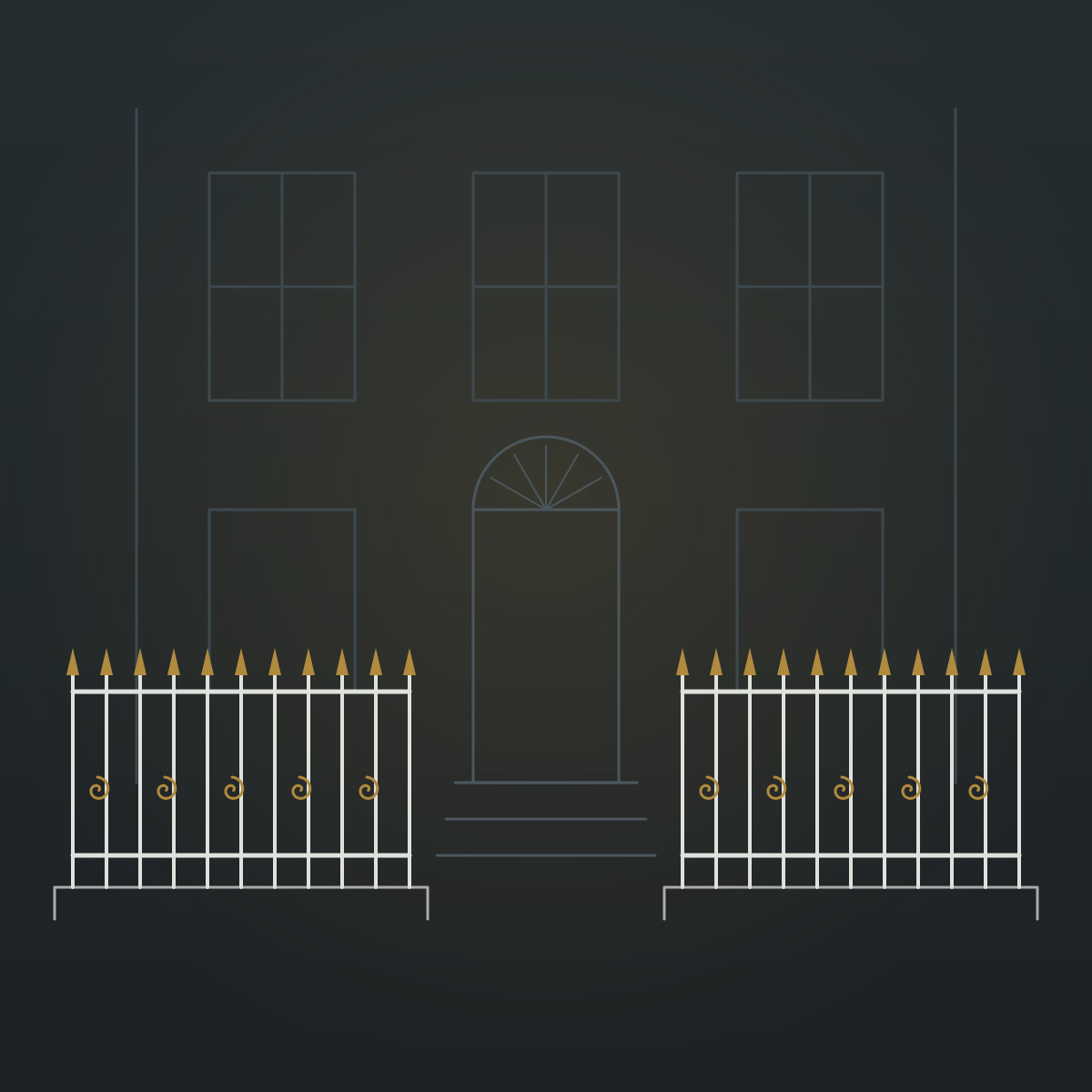
Railings that suit the street
Railings are often the first bit of craftsmanship anyone sees at a London house. On a stucco terrace in Belgravia, a brick Georgian row in Islington or a Victorian villa in Kensington, that line of ironwork does a lot. It marks the boundary and guards the drop into the basement. It also sets the tone for the house behind it.
We make hand-forged railings for three main places:
- Front garden railings on a low wall or stone plinth, often with a gate to match.
- Basement area railings around the lightwell, which is the open space in front of a lower ground floor. You see these on almost every central London terrace.
- Boundary railings for larger gardens, side returns, mews entrances and garden squares.
We draw up every set with you and forge it in our own workshop. Then our London team fits it. We only take on made-to-order work, so the pattern, height and finish are chosen for your house and nobody else’s.
Forged by hand or welded from a catalogue
A lot of what gets sold as wrought iron today is not forged at all. It is straight steel bar welded to cast or pressed parts from a catalogue. From across the road it can look fine. Up close it looks flat. The thin decorative bits and welded joints are usually where rust starts.
Hand-forging means heating the steel until it glows and shaping it on the anvil. Scroll ends are drawn out thin and rolled. Leaves are formed from the bar. Collars go round a joint while hot, so they grip tight as they cool. Finials are hammered to a sharp, clean shape. Our craftsman has 20 years of hand-forging behind him, and you can see it in the small details.
How to spot forged work
- Scroll ends that taper. A forged scroll gets thinner as it curls and often ends in a little rounded or fishtail tip. A cheap scroll is the same thickness all the way and cut off square.
- Collars that wrap the joint. On forged work the collar is a real band of metal. On welded railings you usually find a ground-down weld or a cast clip.
- Small differences. Look closely and each leaf or finial is very slightly different. The overall rhythm is still exact.
- Solid finials. Forged spear heads have crisp edges and real weight. Cast ones are often soft in shape, or hollow.
Wrought iron or mild steel?
We like to be straight about this. True wrought iron was used for most Georgian and early Victorian railings, but it has not been made commercially for decades. Nearly all decorative ironwork made today is mild steel. Ours is too, worked by hand in the traditional way.
Restoration can be different. If you are repairing old railings on a listed building and the conservation officer wants the same material, we can source reclaimed or re-rolled wrought iron for the repairs.
Getting the style right
London’s railings tell you when each street was built. Get the period wrong and people notice, even if they could not say why. Heavy Victorian scrolls on a plain Georgian front just look odd.
Period patterns
- Georgian railings are plain. Square or round bars sit close together with simple spear or arrow tops and a strong top rail. They are usually set into a stone plinth with lead.
- Regency work is lighter. Expect urn, acorn or pineapple finials on the posts, and sometimes a band of honeysuckle or rosettes.
- Victorian railings get richer. You find scrolls, collars, fancy posts and short dog bars along the bottom to keep dogs out. Many mixed cast iron rosettes with wrought bars. We can copy that mix, or make the cast parts in forged form.
- Bow-top railings have rounded loops along the top. They suit front gardens and longer boundaries where you want a softer look.
Matching the house next door
On a terrace you usually want the whole run to look like one piece. We measure and photograph the railings next door. That means the bar size, the spacing, the finial shape, where the rails sit and how the plinth is finished. Then we forge new railings to match.
Many London streets lost their original railings long ago. Then we look at surviving railings nearby and old photographs to find the right pattern.
Two ways to design
You can pick a pattern from our craftsman’s design album, which holds hundreds of proven designs, and adapt it to your frontage. Or you can have a design drawn from scratch. Either way we draw it up in CAD, which means exact computer drawings to scale. They show the bars, the spacing, the finials and every fixing. You, your architect and the council can all check them. Nothing gets forged until you approve the drawings.
Finishes that last outside
A London front takes a beating. It gets rain, road salt and traffic dirt, plus bikes chained to the bars. So the coating matters as much as the forging.
- Hot-dip galvanising means dipping the finished steel in molten zinc. It coats the steel inside and out and is the toughest base for outdoor railings. Very fine detail has to be designed with the zinc bath in mind.
- Zinc spraying puts the zinc on with a hot spray gun instead. It suits delicate pieces, or sections too big for the bath.
- Primer and micaceous iron oxide. Over the zinc we use a primer and then a coat of micaceous iron oxide. That is a tough paint with tiny flakes of iron mineral in it.
- Powder coating gives a smooth, even colour over a well prepared zinc base.
- Black paint is still the normal choice on most London streets. Some conservation areas prefer a very dark green or blue, or a colour based on research into the house.
- Gold leaf can pick out finials, leaves and collars. You see it on grand houses and around garden squares.
Rules, planning and safety
Safe heights and gaps
Where railings guard a drop, such as a basement lightwell or raised front steps, new work should follow Approved Document K. That is the government guidance on stairs, falls and guarding. In a home, guarding on stairs should be at least 900mm high. On external balconies and roof edges it goes up to 1100mm.
No gap should let a 100mm ball pass through. In homes, the design should also avoid horizontal bars that a child could easily climb. We sort all of this out at drawing stage. If an old railing height clashes with today’s guidance, we talk the options through with you and the conservation officer.
Planning and conservation areas
Some small works can be done without a planning application. This is called permitted development. Under it, railings next to a road can usually be up to 1 metre high. Anything taller generally needs planning permission.
Much of central London is in conservation areas, where the council protects the look of the streets. Some of these have an Article 4 direction. That is a local rule that removes some permitted development rights, so work you could normally just do may need permission. Always check with your council before you commit. We can supply drawings for an application.
Listed buildings
On a listed building, the railings are usually covered by the listing too. You will normally need listed building consent, which is permission from the council to change a protected building. The conservation officer will look closely at materials, shapes and fixings. We can prepare the drawings and details they ask for.
Fixing into stone and brick
Many old railings fail right where the bars go into the stone. Iron set straight into stone or brick rusts over time. Rust takes up more room than the metal it came from, so it swells and cracks the coping, the flat stone cap on top of the wall. We use the right fixing for each base, from traditional lead to modern resin and grout. We also shape the base so water runs away from the bars.
Sometimes the dwarf wall, the low wall under the railings, is cracked or loose. We can rebuild it and its coping as part of the same job, so you do not need a separate builder before the railings go in.
How a job runs
- Visit. We come out, look at the house and the street, and talk about what you want, any planning points and your timing.
- Survey. We measure exactly, record levels and old fixings, and photograph any ironwork we need to match.
- Design. We start from the album or a blank sheet and send CAD drawings for your approval. These can also go with a planning or listed building application.
- Quote. You get a detailed quote for the approved design and finish.
- Forging. We forge the railings in our own workshop and apply the agreed finish.
- Fitting. Our London team fixes the railings into the plinth, wall or steps. We make good around them and touch up on site.
Looking after your railings
Forged railings need little care. Little is not none, though.
- Check them once a year, ideally in spring. Look at the bases, the tops of flat rails and anywhere bikes get locked.
- Touch up chips quickly so rust never gets under the paint.
- Wash off dirt and salt with water and a soft brush, especially after winter.
- Repaint every few years, depending on how exposed they are. On a good zinc base this is mostly about looks.
- Gold leaf wants gentle cleaning. Patch it when it starts to wear.
Request a quote
Planning new railings, restoring an original run or matching your neighbours? Request a quote with our short online form, or give us a call to arrange a visit. We will look at the house and the street with you, then send a proposal for your frontage.