Two Clerkenwells
Clerkenwell has two quite different faces, and both suit hand-forged iron.
The first sits on the slope that climbs towards Pentonville Road. Here are planned Georgian squares, built by landowners in the 1820s and 1830s. The New River Company, which brought fresh water into London along its New River channel, built on its land here. Myddelton Square was laid out by the company’s surveyor, William Chadwell Mylne, between 1824 and 1836. His church of St Mark stands in the middle, and the houses and church are listed Grade II.
Next door is the Lloyd Baker estate. Lloyd Square was built around 1832 to designs by the estate surveyor John Booth and his son. It still has its early 19th-century cast-iron railings, listed with the houses. To the south, Wilmington Square was built in the 1820s on the Spa Fields estate. Its garden railings are part of the Grade II listing of the terraces around it.
The second Clerkenwell is lower down, around Clerkenwell Green, St John Street and Exmouth Market. These streets are older and tighter. The Marx Memorial Library on Clerkenwell Green was built in 1738 as the Welsh Charity School. Around it, old workshops, printworks and warehouses have become lofts, studios and offices. Restaurants and bars fill many of the ground floors.
What the ironwork looks like here
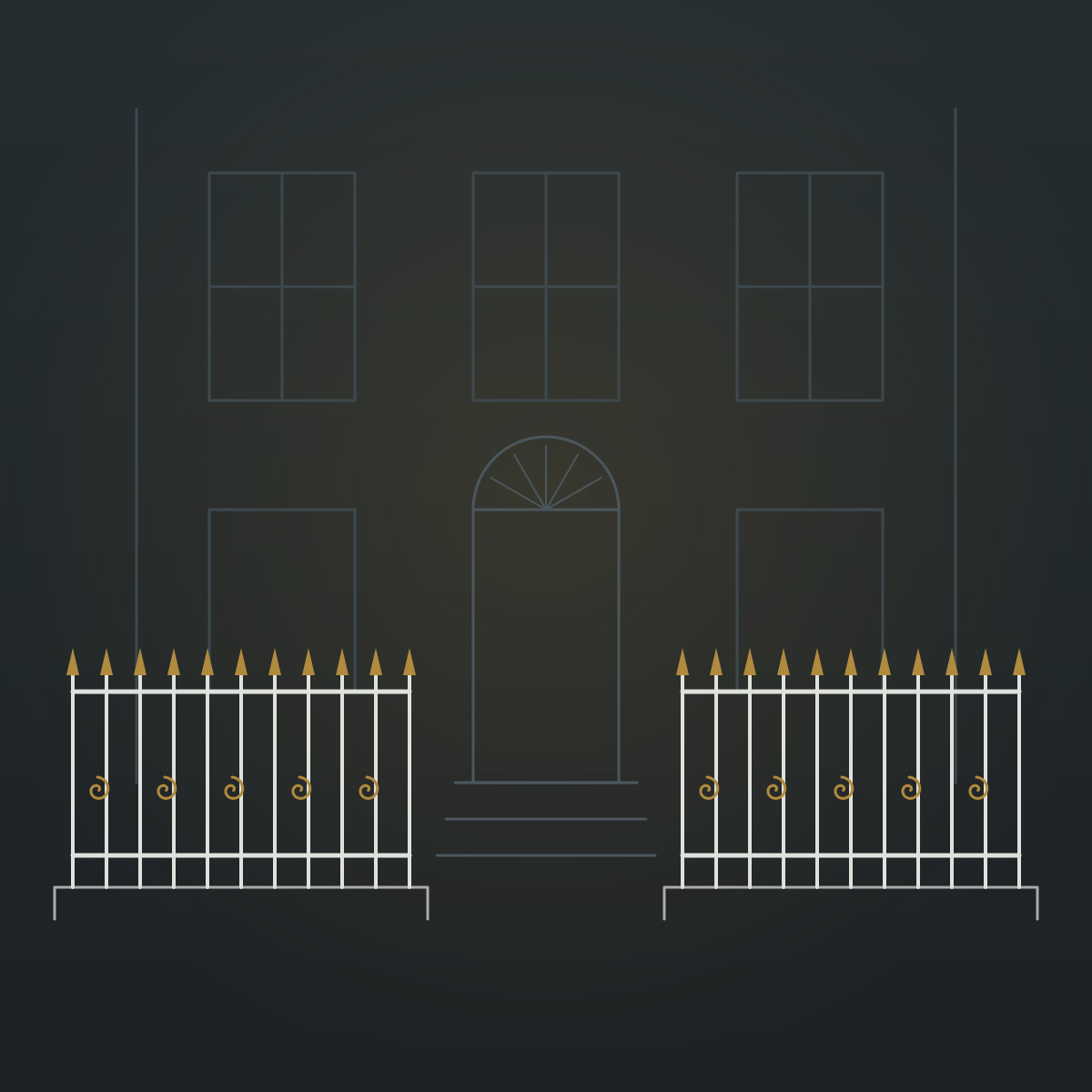
On the squares, the ironwork is Georgian and plain. Area railings guard the basement areas, which are the sunken yards in front of each house. Garden railings enclose the squares themselves. On Lloyd Square the old cast-iron railings set the pattern for anything new.
Down in the warehouse streets, there is no single style. Lofts have open plans, high ceilings and mezzanines. The ironwork there is about stairs, balustrades and screens, and owners often want the hammer marks of hand-forging to show.
Ironwork for Clerkenwell homes and businesses
Railings for the Georgian squares
On Myddelton, Lloyd and Wilmington Squares, the job is to repair, extend or copy what is already there. We record bar sizes, spacing and finials on site and forge new lengths to match.
Spiral staircases
In a converted warehouse, a spiral stair can reach a mezzanine or roof terrace without eating the floor. Each one is designed around your opening and headroom. Treads, balusters and handrail are drawn with you.
Staircase balustrades
From Georgian stairs on the squares to loft mezzanines near St John Street, we make balustrades in traditional or plainer modern patterns. Inside a home the guarding must be at least 900mm high, and a 100mm ball must not pass through any gap.
Canopies and restaurant ironwork
For restaurants and bars, we forge glazed entrance canopies, external railings and balustrades for basement or mezzanine dining rooms.
The building work around the ironwork
A spiral stair in a Clerkenwell loft needs a hole in the floor, and old warehouse floors are not always simple. We can form the opening and frame it with the timber or steel your engineer specifies. Then we fit the stair and make good the ceiling below. On the Georgian squares the same team can repair a cracked stone plinth or a worn front step before the railings are refixed. You do not need a separate builder for either job.
Planning and consent in Islington
Clerkenwell is in the London Borough of Islington, and most of it sits in a conservation area. That is a district the council protects for its historic look. The New River Conservation Area covers Myddelton, Lloyd and Wilmington Squares. Clerkenwell Green, Charterhouse Square, Northampton Square, Hat and Feathers and Rosebery Avenue Conservation Areas cover much of the rest.
On the squares, railings are often listed with the houses. Work to them needs listed building consent, which is permission from the council to alter a protected building. For a restaurant front, a new canopy or railing will usually need planning permission too. Please check with Islington before you commit. We provide drawings and a specification for each application.
Design, forging and installation
You can choose from our design album, which holds hundreds of proven patterns, and adapt one to your building. Lofts and restaurants often call for a fully bespoke design, drawn in CAD with you or your architect. Nothing is forged until you approve the drawings.
Your ironwork is forged in our own workshop by a craftsman with 20 years of hand-forging experience. Our London team installs it. Clerkenwell streets are narrow and parking is controlled, so we book bay suspensions and delivery times ahead. For bars and restaurants we can fit outside trading hours.
Whether it is a railing on Lloyd Square or a spiral stair in a loft off Clerkenwell Road, request a quote with our short form, or call us to talk it through.