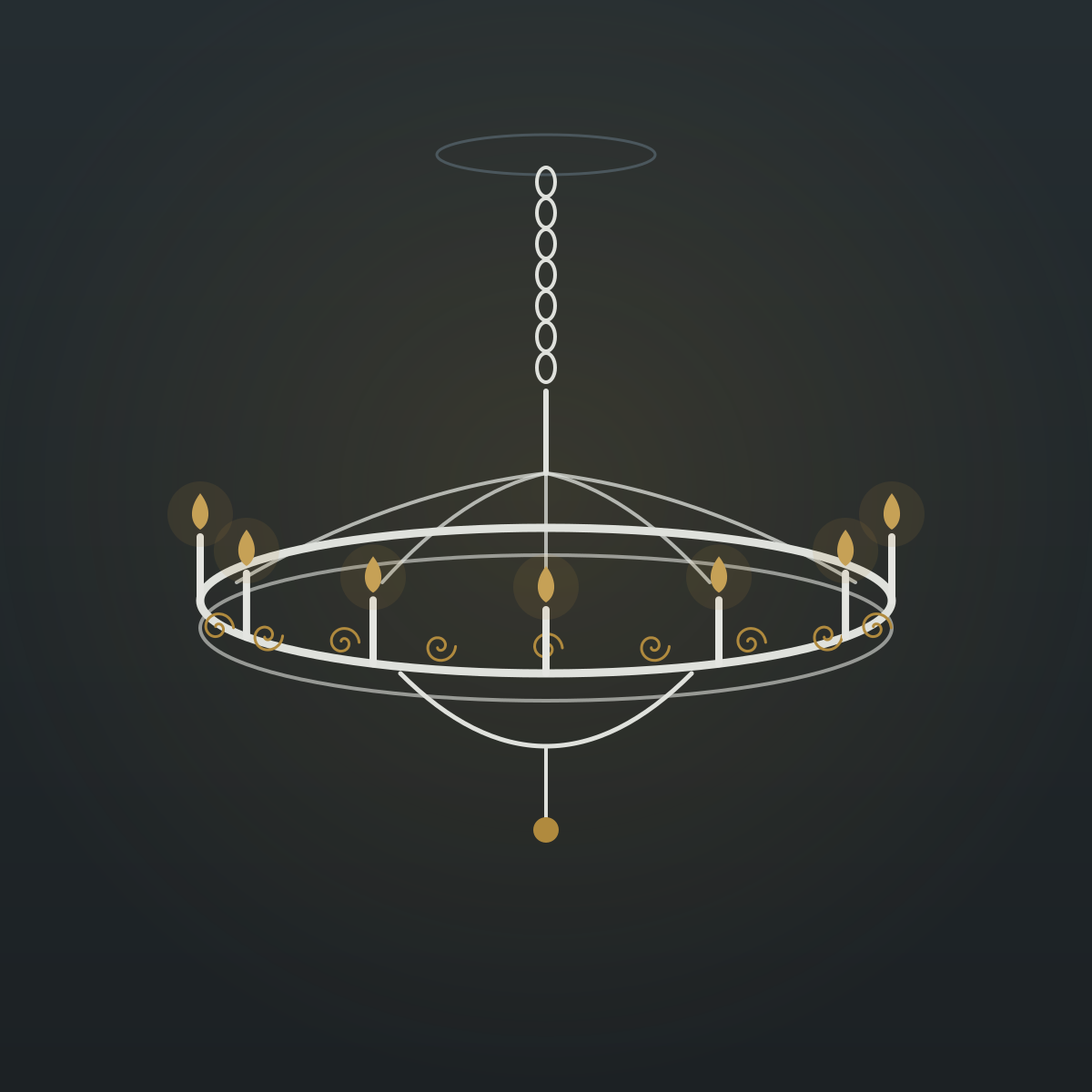
Light with some weight behind it
A forged iron chandelier is not the same thing as a fitting from a shop. Each arm is bent by hand. Each scroll is drawn out at the anvil. No two collars or leaves come out exactly alike, and you can see that up close.
In a big room it gives the eye somewhere to land. In a stairwell it fills the height. In a restaurant it sets the mood before anyone has picked up a menu.
We make chandeliers and lighting for private houses, hotels, restaurants, bars and event spaces. Our craftsman has 20 years of hand-forging experience. That covers large ring chandeliers with scrolls and candle arms, and also chunky iron and timber pendants for restaurants. Every fitting is forged in our own workshop. We deliver across the UK, and our London team installs in the capital.
What we make
Ring and tiered chandeliers
The ring chandelier is the classic forged shape. One or more iron rings carry candle arms, joined by scrolls, collars and sometimes hand-formed leaves. A single ring works over a dining table. Stack two or three rings around a central stem and you have something with real height, ready for a double-height hall or a hotel lobby.
Candle-arm chandeliers
Here the arms finish in forged candle cups. Each cup holds a candle sleeve and a candle-style bulb. Period houses often call for this warm, old-fashioned look. We set the number of arms, the curve and the spacing to suit the room.
Iron and timber pendants
In restaurants, bars and kitchens, a heavy timber beam hung on forged straps and chains can carry a row of pendants. We forge the iron to match the size of the timber, so neither looks too thin. The finish is chosen to sit with the rest of the room.
Lanterns
Forged lanterns suit halls, porches, courtyards and terraces. They can hang on a chain, sit on a wall bracket or stand on a post. The glass can be clear, seeded with small bubbles, or frosted.
Wall lights
Wall lights carry the scheme down a corridor or around a room. We often forge them to match a chandelier, a staircase or a set of railings. That way all the ironwork in the house looks related.
Getting the size right
Size is where most chandeliers go wrong. Too small and it looks lost. Too big and it crowds the room. These rules of thumb are a starting point, and we adjust them for every job.
- Width. Add the length and width of the room in metres and multiply by about eight to ten. A room of five by six metres points to a chandelier of roughly 90 to 110 centimetres across.
- Over a table. Keep it a little narrower than the table. A long table may suit a longer fitting, or two that match.
- Where people walk under it. The bottom should sit well above head height, at least around two metres and more in a grand room.
- Over a dining table. The bottom usually sits around 75 to 90 centimetres above the table top. That lights the table without blocking the view across it.
- Stairwells and double-height rooms. People see the chandelier from above as well as below. We look at the view from the landing and the stairs, and may suggest a tiered or longer shape.
Before anything is forged, we draw the fitting to scale in your room. You see its size in context before you say yes.
Choosing a design
From the design album
Our craftsman keeps a design album with hundreds of proven patterns for arms, rings, scrolls, collars and leaves. Many clients pick one and change the width, the number of arms or the finish. You know roughly how it will look before work starts.
Drawn from scratch
Interior designers, architects and clients with a clear idea often want a fully original piece. We draw it in CAD with the sizes, the drop, the arm layout and the fixing details. We can also work with your lighting designer on bulbs and light levels. Nothing is forged until you approve the drawings.
Wiring and safety
A chandelier is an electrical fitting as well as a piece of ironwork, so it has to be safe.
- We use approved lampholders, cable and parts.
- Cable routes are planned into the design, so wires run neatly through the arms and stem.
- Every fitting is earthed, because iron conducts electricity.
- A qualified electrician installs it to BS 7671, the UK wiring rules.
- Some work, such as a new circuit, may need to be reported to building control under Part P. Your electrician will advise.
- Dimmable bulbs and matching dimmers let you change the mood, which matters a lot in restaurants and bars.
Weight and fixing
Iron is heavy. A large forged chandelier weighs far more than an ordinary pendant. A standard ceiling rose will not hold it, and nor will plasterboard. It has to hang from a joist, a timber brace fitted between joists, or a steel support.
Older buildings need extra care. Lath and plaster ceilings, which are thin strips of wood with plaster pressed over them, can be fragile. Hotels and restaurants often have suspended ceilings that carry very little. For bigger pieces, a structural engineer should confirm the fixing. We give you the finished weight and our fixing advice at drawing stage, so the ceiling can be ready in time.
In London we can do that preparation too. Our team can open the ceiling, fit the support and make good the plaster afterwards, so you are not waiting on a separate builder.
If the chandelier hangs very high, a winch makes cleaning and bulb changes far easier.
Finishes
The finish changes the character of a fitting as much as its shape.
- Blackened and waxed. The traditional forge finish. It shows the texture of the hammered iron and suits most interiors.
- Hand-painted. Heritage or modern colours, often lightly rubbed back on the edges.
- Powder coated. A tough, even finish for simpler designs and busy commercial rooms.
- Gold leaf. On a few leaves or collars, or over more of the piece for a richer look. Gilded acanthus leaves are something our craftsman does particularly well.
- Outdoor protection. Lanterns for outside get a proper coating system and parts rated for outdoor use.
Hotels, restaurants and bars
Lighting in a busy venue has to look good, take daily wear and be easy to look after. We work with interior designers and operators on lobby and dining room chandeliers, pendants for bars, and matching wall lights and lanterns. The same pattern can run into forged ceiling grids, screens and other ironwork in the venue.
Bulbs and the quality of light
The iron gives a chandelier its character. The bulbs decide how the room feels. Warm white LED bulbs in candle or filament styles suit most forged fittings. They run cool and use little power. Think about the colour of the light, how bright the room needs to be, and whether this is the main light or one of several. In restaurants and bars, dimming is close to essential. Choose the bulbs and dimmers together and test them before opening night.
UK delivery, London installation
We deliver across the UK. In London our own team installs, working with your electrician. Outside London we send detailed weight, fixing and assembly notes, and we are happy to talk to your contractor before the day.
How a commission runs
- First conversation. We talk about the room, how you use it and the look you want, using photos, plans or your designer’s brief.
- Design. We suggest a pattern from the album or draw something new, to scale in your room, with sizes, weight and fixings.
- Forging. The chandelier is forged by hand in our own workshop, wired with approved parts and finished.
- Delivery and fitting. We deliver across the UK and install in London, alongside your electrician.
We focus on new, design-led lighting. We do not repair old fittings or sell stock items.
Request a quote
Want to talk about a chandelier, pendant, lantern or set of wall lights? Request a quote through our short online form, or give us a call. Send the room size, the ceiling height and any photos or pictures you like. We will then arrange a time to talk it through.