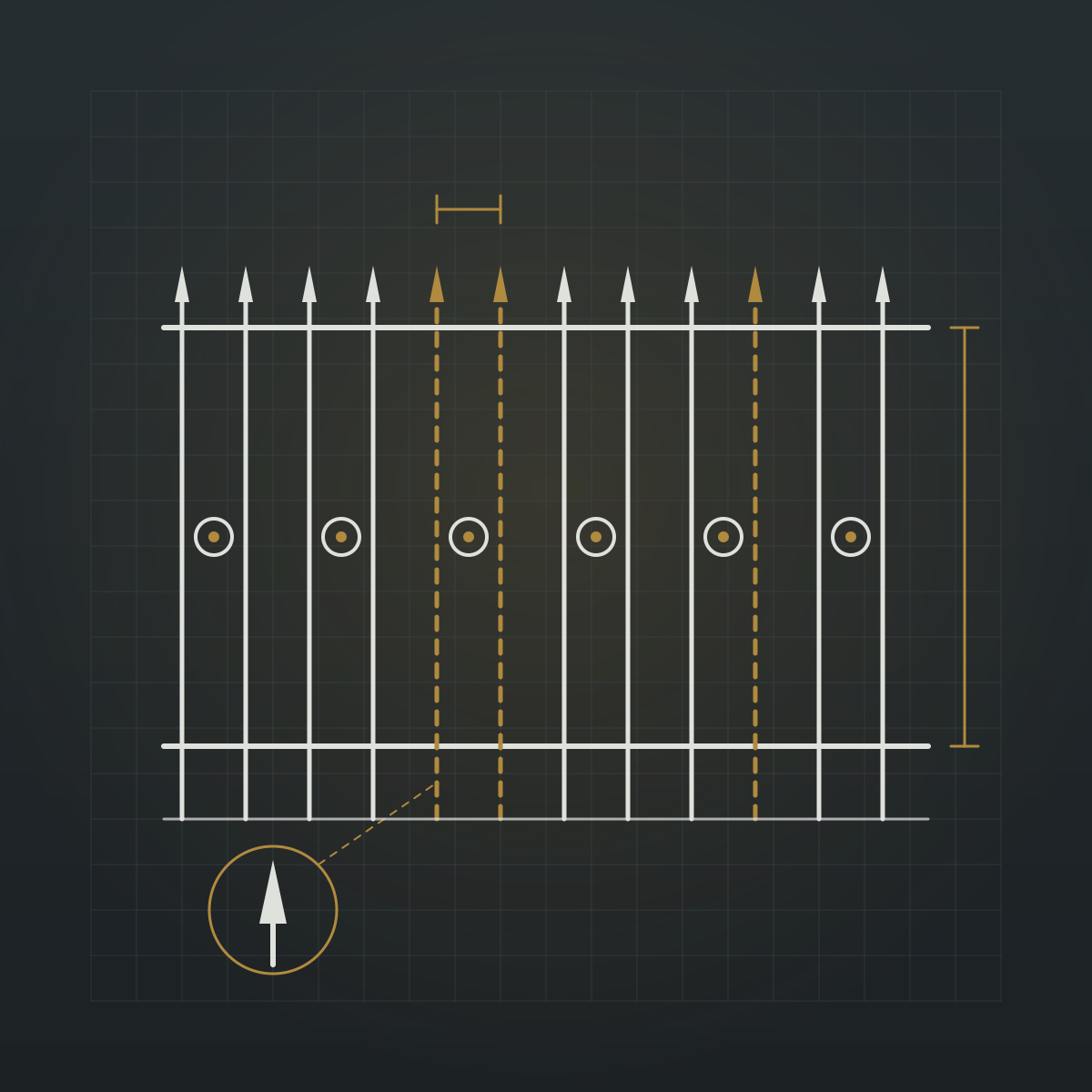
Looking after London’s old ironwork
Railings do a lot for a London street. Think of the steady line of Georgian bars along a terrace. Or the lacy ironwork on a Regency balcony, or the heavy cast tops around a Victorian square. Take them away and the street looks bare. Many have stood for well over a century, and they need careful, informed work to keep going.
We restore and copy period railings, gates and balconies. Our clients include owners of listed houses, residents’ associations, managing agents, architects and conservation specialists. Our craftsman has 20 years of hand-forging experience, and much of that goes into matching old scrolls, collars and finials. We follow accepted conservation principles. New and repaired parts are made in our own workshop and fitted by our London team.
How we approach old ironwork
Historic England publishes guidance on repairing historic ironwork, and we work in line with it.
- Mend before you replace. Original iron has historic value. We keep as much as we can and only replace what cannot be saved.
- Like for like. Repairs match the original in material, shape and detail, so the character is not lost.
- Do only what is needed. We secure the ironwork and stop there.
- Keep a record. We photograph and note the condition before, during and after the work.
- Understand first. We find out what the ironwork is made of, how it was put together and its history before deciding what to do.
Wrought iron, cast iron and mild steel
A lot of what people call wrought iron is really cast iron or mild steel. The difference matters. Each material behaves in its own way and needs its own repair.
Wrought iron
True wrought iron was worked with a hammer, which gives it a stringy grain a bit like timber. It is tough and stands up to rust well. When it does rust, that layered grain can show. It was used for bars, scrolls and forged ornament, mostly before the mid-Victorian years. Nobody makes it commercially any more. For repairs we use reclaimed or re-rolled wrought iron where it is needed.
Cast iron
Cast iron is poured hot into sand moulds. That made fancy, repeated ornament cheap, which is why Victorian railings are covered in cast finials, rosettes and panels. It is strong when squeezed but brittle. A knock, a frost or rust swelling inside a fixing can crack it. It cannot be forged. Repairs need special methods, such as metal stitching across a crack, pinning, or casting a new piece.
Mild steel
Mild steel is the modern material. Most new forged ironwork, ours included, is made from it, because it forges and welds well. On an old run of railings you may find it in earlier replacement bars. It can also be the right choice for new parts, if the conservation officer agrees.
How a restoration runs
Survey
We start with a survey. We record the length and layout of the ironwork, what it is made of, how it was built and what state it is in. We note missing or broken parts, loose bars, cracked castings, rusted fixings and the condition of the stone base or copings. Copings are the capping stones the railings sit in. Photos and measured details become the restoration plan, and they support any application for consent.
Taking down and stripping
Sections that need workshop repair are taken down carefully, labelled and removed. Old paint is stripped by a method that suits the piece. That might be controlled blasting, or hand work on delicate parts. Old paint often contains lead, so we strip it with proper controls. The paint layers can also tell us what the original colours were.
Treating rust and repairing
Once stripped, the true state of the iron shows. We then:
- Clean off rust and prepare the surface for protection
- Repair or replace bars that have lost too much metal
- Re-forge scrolls and collars that are bent or broken
- Stitch, pin or replace cracked cast parts
- Renew fixings that have rusted inside stone or brick
Copying missing parts
Missing finials, scrolls, collars and castings are copied from the survivors. Forged parts are forged by hand to the original shape. Cast parts are usually remade from a pattern taken off a sound original, so the new casting matches its neighbours.
Fixing into stone
Railings were traditionally set into holes in the stone and fixed with molten lead. When iron rusts inside the hole it swells, and that can split the stone. The trade calls this rust jacking. We deal with the rusted fixings, repair or reset the bars and use a fixing method agreed for the building.
Often the stone and brick under the railings need as much care as the iron. Because the craftsman behind London Forge is also an experienced builder, our team can repair or rebuild the low wall, replace broken copings and reset the railings in one job. For finely carved or rare stone, we bring in a specialist stonemason.
Repainting
The last layer of protection is a paint system chosen for the iron and the setting. Options run from traditional linseed oil paint to modern coatings such as micaceous iron oxide. Sections that come off can sometimes be galvanised or zinc-sprayed before painting. That is not always right for historic iron, though. Colour is often set by the street or estate, and black is not always historically correct. Where there is evidence for it, gilding on finials and details can go back on.
Putting back railings lost in the 1940s
During the Second World War, huge numbers of London railings were cut down for scrap. Front gardens, basement areas and garden squares lost ironwork that had stood for generations. You can still see the cut stubs in the stone along many streets.
Putting them back is some of the most satisfying work we do. We base the new design on:
- Surviving railings on the same terrace or square
- Old photographs, drawings and estate records
- Clues in the stone, such as the spacing of the holes and the shape of the stubs
- Advice from the local conservation officer
The street gets back the look it was built with. A basement area with railings is often safer too.
Permissions and working with others
Most buildings we work on are listed or sit in conservation areas. A conservation area is a part of town the council protects for its character. Permissions and professional advice come with the job.
- Listed building consent. Railings on a listed building, or on its land, are usually protected too. Like-for-like repair may not need consent, but changes in design, material or finish usually will. So will replacing a lot of the original iron. Always check with the conservation officer before work starts.
- Conservation areas. Putting back or changing railings on a front may need planning permission, and the council will look closely at the design.
- Approved Document K. This is the part of the Building Regulations about falls. Where railings guard a drop, such as a basement area or a balcony, it can apply to new work. Openings must not let a 100mm ball pass through. We talk through how to balance safety with the look of the old ironwork.
- Other professionals. We work with architects, surveyors, conservation officers and stonemasons, and provide survey records and a written method for applications.
Signs your railings need attention
Ironwork usually warns you well before it fails. It is worth booking a survey if you see:
- Rust stains running down the stone base or the steps
- Cracked or lifting stone around the foot of the bars
- Bars that move when pushed, or gates that drop and drag
- Flaking paint with rust showing underneath
- Missing finials, collars or cast decoration
- Cracks in cast parts, often near fixings or after a knock
Acting early usually means more of the original can be saved. That is better for the building, and the job stays simpler.
Looking after restored ironwork
A good restoration still needs regular care.
- Look over the railings once a year, especially at the base and the joints where water sits
- Wash them down now and then to remove dirt and road salt
- Touch up chips and scratches quickly, before rust spreads
- Keep soil and plants away from the foot of the bars
- Plan repainting ahead, rather than waiting for the paint to fail
Who we work with
We work with owners of listed houses, residents’ associations and garden square committees, managing agents, architects and conservation professionals. We focus on proper restoration and reinstatement work rather than small spot repairs. Each job gets careful attention from the survey to the final coat.
Request a quote
Do your railings, gates or balconies need restoring? Or are you planning to put back railings that were lost? Request a quote through our short online form, or give us a call. Photos of the ironwork help, and so does knowing whether the building is listed or in a conservation area. We will then arrange a time to visit and survey.