Two squares behind the Borough
Walk east off Borough High Street and the traffic noise drops away. You reach Trinity Church Square and, just beyond it, Merrick Square. Both were built on land owned by the Corporation of Trinity House, the body that looks after lighthouses. Trinity House has held the land since 1661, when it came through the will of Christopher Merrick.
Trinity Church Square
Trinity Church Square was built between 1824 and 1832 as a planned group of houses. The terraces have three main storeys, a basement and an attic. The walls are yellow stock brick above a ground floor of grooved stucco. At the centre stands Holy Trinity Church, designed by Francis Bedford and consecrated in 1824. It burned out in 1973 and was rebuilt as a rehearsal hall, now called Henry Wood Hall.
Merrick Square
Merrick Square is smaller and quieter. It was built between 1853 and 1856 to designs by Richard Suter. The houses have two main storeys, so the square feels more intimate than its neighbour.
The railings and gates you see here
These squares are unusual because so much old ironwork survives. Southwark’s own appraisal says the basement areas still have their cast iron railings with spearhead finials. Every house except the former Trinity Arms pub on Swan Street keeps its front railings and gates.
The garden railings tell a different story. Merrick Square’s central garden keeps its cast iron railings. The railings around Trinity Church Square’s garden, and around the church, are reproductions from the 1970s.
The council’s guidance is firm. It wants original ironwork kept and painted, usually black. Where pieces are missing, it asks for good quality replacements.
Ironwork for Southwark houses
Gates
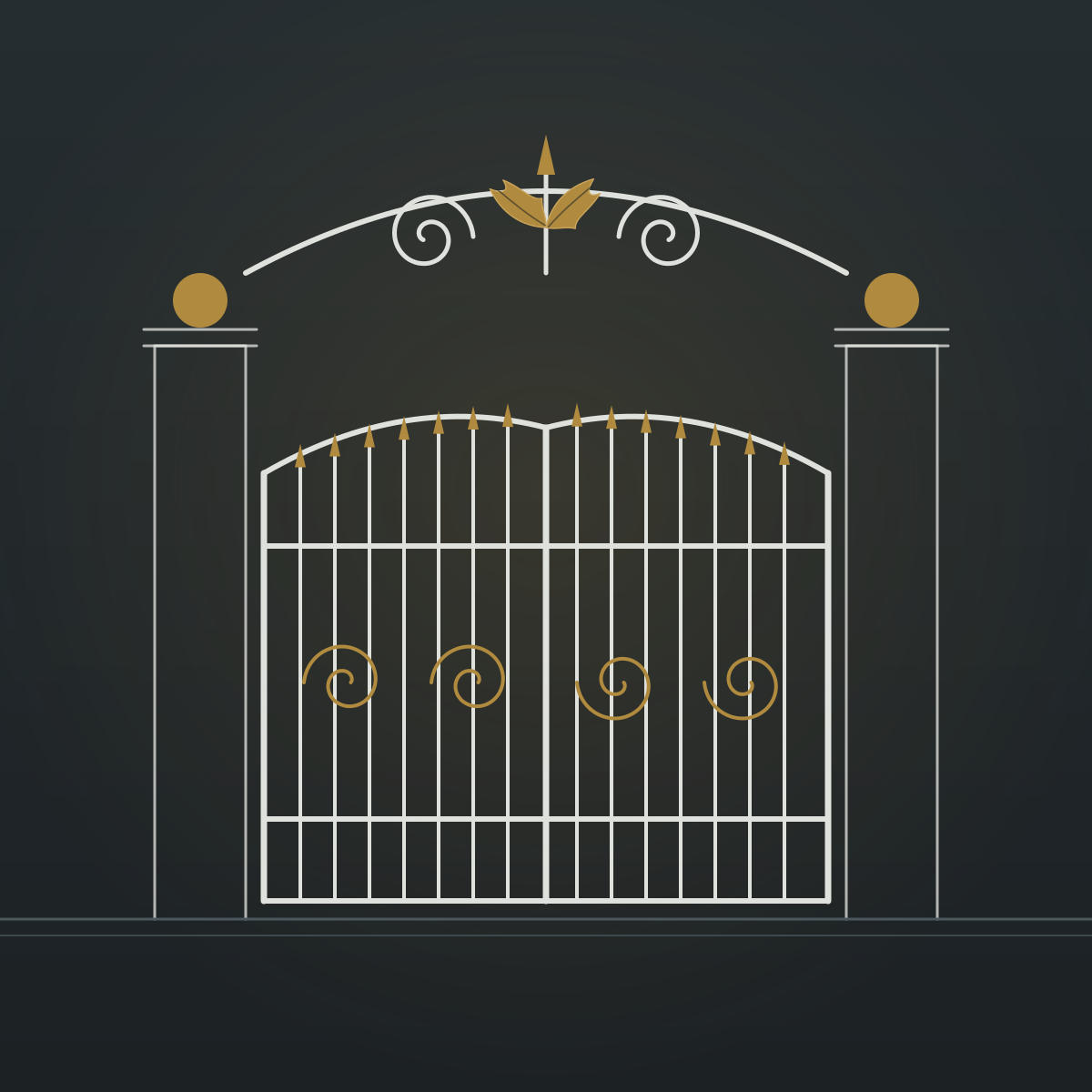
Front gates here are hung in line with the railings, so each gate reads as part of the run. A worn or broken gate stands out on a terrace where every other house still has its own. We forge new gates to match the spearheads, bar spacing and top rail of the run beside them. We also fit them with hinges and latches that suit an early 19th century front.
Railings and restoration
Where old railings are rusted or a finial has snapped off, we repair them in place if we can. Where a length is too far gone, we forge a new section to match. True wrought iron is no longer made, and this is cast iron in any case. So we work in hand-forged mild steel, shaped and finished to read the same as the old work once painted.
Gates and entrances for Borough Market and Bankside
The other side of Borough High Street is a different world. Borough Market’s buildings were designed by Henry Rose in 1851 and built through the 1850s. An Art Deco entrance on Southwark Street followed in 1932. In 2004 the South Portico from the Floral Hall at Covent Garden was put up at the market. Restaurants, bars and food shops now fill the streets around it and along Bankside.
For these clients we make courtyard and alley gates, entrance canopies, forged sign brackets and decorative screens. Gates for a restaurant yard have to lock securely at night and open fully by day. We design each one around how the space is actually used. Fitting is planned around opening hours, deliveries and market days, so the business can keep trading.
Building work around the ironwork
On the two squares, the railings guard the basement areas in front of each house. Over time, rusting bar ends can split the copings they are fixed into. Front steps wear and area walls crack.
Our team handles that work as part of the same job. We can reset or replace copings, repair the steps, and make good the area walls before the railings go back. For hospitality clients we also do the building work around a new gate or canopy, such as new piers, fixings into old brick and making good the walls afterwards.
Planning in Southwark
Trinity Church Square Conservation Area was designated in 1968. A conservation area is a place the council protects for its history and character. The terraces are listed, so changes to railings or gates usually need listed building consent. The Trinity House estate may also have a say as landowner.
Borough Market and the streets around it are in the Borough High Street Conservation Area, which contains Southwark Cathedral and the George Inn. New gates, canopies or signs there may need planning permission. Always check with Southwark before you order. We supply scaled drawings and a materials list for your application.
How a commission works
You can choose a pattern from the craftsman’s design album and adapt it. Or we can draw a fully bespoke design in CAD. Nothing is forged until you sign off the drawings.
We survey first, then forge each piece in our own workshop, drawing on 20 years of hand-forging experience. Our London team installs.
Request a quote through our short online form, or give us a call.