Spitalfields: the weavers’ houses
Spitalfields sits just outside the old City of London, east of Bishopsgate. French Huguenot refugees settled here as the area was built up. Many were skilled silk weavers from Lyons and Nantes, and Spitalfields became the centre of London’s silk trade.
Between 1718 and 1728, Charles Wood and Simon Michell built the streets around Fournier Street, Wilkes Street and Princelet Street. The houses were built to a higher standard than most local housing at the time. They are plum-coloured brick with red brick dressings and finely detailed wooden doorcases. Weavers put their looms on the top floors for the light, which is why some houses have glazed lofts. Fournier Street was the last street built on the Wood and Michell estate, and most of its houses date from the 1720s.
Over all of this stands Christ Church Spitalfields, by Nicholas Hawksmoor. Its foundations were laid in 1714 and it was consecrated in 1729. It is listed Grade I.
Just north, Elder Street was begun around 1722 on the St John and Tillard estate. It and Folgate Street keep rows of three-storey brick Georgian houses.
The railings of Spitalfields
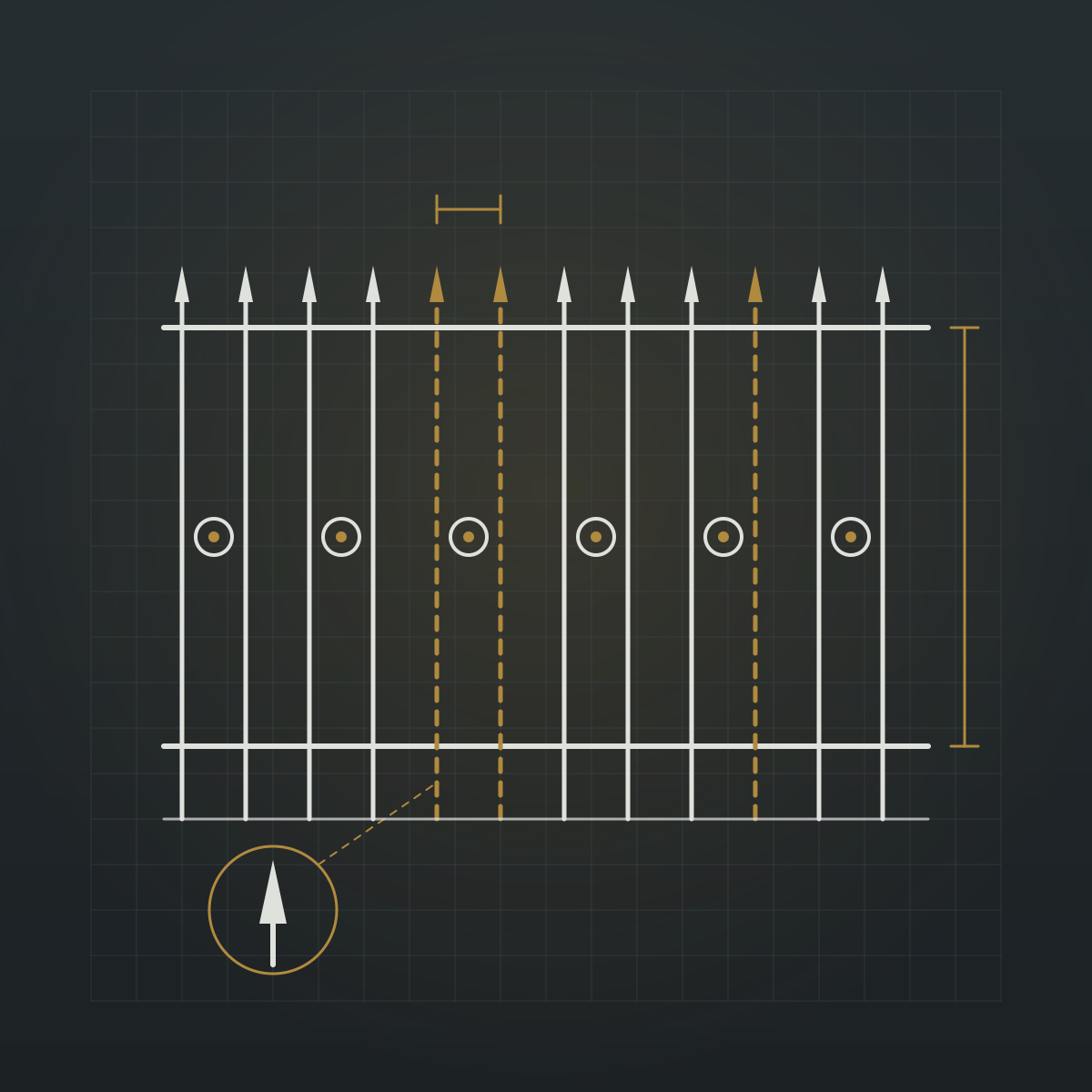
The ironwork here is some of the oldest on any London street. They guard the basement areas in front of the houses, and the listings simply call them area railings. What makes them special is their age, not fancy decoration.
Many runs are protected on their own. On Fournier Street, the area railings at several houses have separate Grade II listings. On Elder Street, the railings at numbers 8, 11, 32 and 34 are listed, and so are those at 37 Spital Square. The council’s own appraisal names original ironwork as a feature of the 18th century houses that must be kept.
So in Spitalfields, the best work is often the least visible. A good repair should be hard to spot.
Ironwork for Spitalfields houses and businesses
Repairing listed railings
We start by recording what is there. Then we repair bars, collars and finials in place where we can. Where a piece is lost, we forge a new one to the same size and shape. On early railings, reclaimed or re-rolled wrought iron can be used for repairs, as true wrought iron is no longer made commercially.
Reinstating lost railings
If a house has lost its railings, we draw new ones from a surviving neighbour on the same street. The council asks for the original pattern, so that is what we follow.
Restaurants, bars and shops
Brick Lane and the streets off it are full of restaurants, bars and shops. We make front railings, handrails, staircase balustrades and signage brackets. For an old building, we keep the design simple so it does not fight the shopfront.
Inside the house
Spitalfields interiors often keep panelling and old staircases. Where ironwork is needed, such as a stair down to a converted basement, we design it to sit quietly next to the timber.
Building work around the ironwork
In Spitalfields, the building work matters as much as the iron. Old railings are often set into stone copings or brick, and rusting iron can split them. Lightwells and basement steps can also be worn and patched.
We can repair or replace damaged stone, rebuild short lengths of brick under the railings and repair basement steps. We match the plum-coloured brick and the pointing of the house as closely as we can. On restaurant and shop fit-outs, we can also handle the building side around a new staircase or balustrade, such as making the stair opening and making good afterwards. One team does it all, which keeps a listed job simple.
Planning and consent in Tower Hamlets
Tower Hamlets Council is the planning authority. Fournier Street, Wilkes Street, Princelet Street and Brick Lane sit in the Brick Lane and Fournier Street Conservation Area. It was first designated in July 1969 as the Fournier Street Conservation Area and later extended and renamed. Elder Street and Folgate Street form the Elder Street Conservation Area, also designated in 1969.
The council’s appraisal says the listed terraces of Fournier, Wilkes and Princelet Streets should be conserved to the highest standards. It also says that replacing railings is minor work that still needs consent. If a house or its railings are listed, you will need listed building consent too. Please check with the council before you plan any work. We supply measured drawings, photos and a written method for the repair.
Design: our album or a close copy
For new restaurant pieces, you can pick from our design album of hundreds of proven patterns and adapt one. For listed houses, we usually draw a bespoke CAD record of the surviving railings and copy it. Either way, nothing is forged until you approve the drawings.
How a commission runs
We visit to survey and record the ironwork, the stone and the steps. We agree the scope with you and help prepare the consent application. New pieces are hand-forged in our own workshop, and our London team carries out the repair and fitting on site.
If you own a house in Spitalfields or run a business on Brick Lane and need railings repaired or made, request a quote and tell us about the building.